LinkedIn has evolved far beyond a simple professional networking platform. Today, it is one of the most powerful tools for B2B marketing, brand positioning, and lead generation. However, many businesses fail to see results because of avoidable LinkedIn marketing mistakes that weaken visibility, reduce engagement, and limit conversions. While this type of marketing offers immense potential, success depends on using the platform strategically and consistently. Understanding the most common LinkedIn marketing errors can help businesses refine their approach, improve engagement, and align their efforts with proven best practices. Below are the key mistakes businesses should avoid – and how to fix them.
Why Many Businesses Fail at LinkedIn Marketing
Many businesses approach the platform without a clear strategy or understanding of its professional audience. Treating this platform like other social media channels often leads to overly promotional or irrelevant content that fails to resonate. Inconsistent posting, lack of content planning, and ignoring engagement further reduce visibility and credibility. Another common reason is poor profile and company page optimization, which limits discoverability in LinkedIn searches. Businesses also overlook analytics, which makes it difficult to identify what works and refine their approach. Failing to follow LinkedIn marketing best practices – such as delivering value-driven content, engaging in conversations, and targeting the right audience – results in low reach and weak engagement. Without a consistent, data-driven, and audience-focused strategy, these marketing efforts struggle to generate meaningful results.
Planning to transform your LinkedIn strategy into a lead-generating machine?
Common LinkedIn Marketing Errors That Limit Business Growth
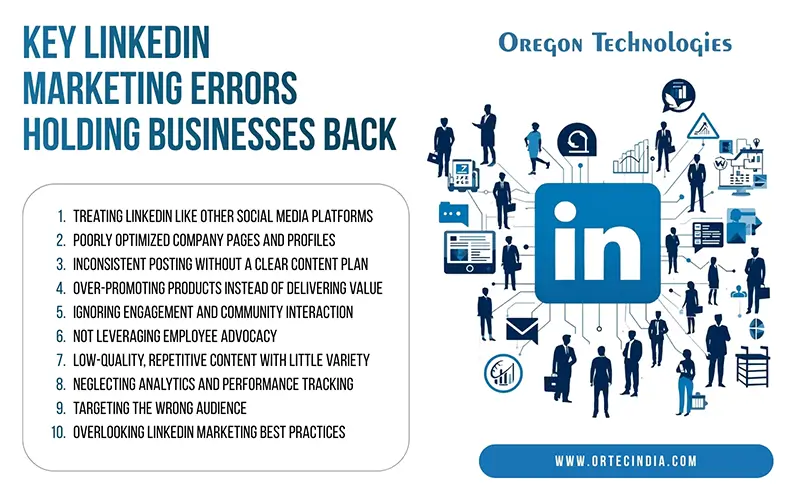
Many businesses struggle with LinkedIn marketing because small but critical errors limit visibility, engagement, and lead generation. From poor targeting to inconsistent content and weak optimization, these mistakes prevent marketing efforts from supporting long-term business growth. Below listed are some common LinkedIn marketing mistakes affecting engagement:
- Treating LinkedIn Like Other Social Media Platforms: Using the same content strategy across all social platforms is one of the poor LinkedIn marketing practices. Unlike other social media platforms like Facebook, Instagram, or X, this is a professional network where users expect industry insights, thought leadership, and value-driven discussions. Businesses that post overly promotional content or casual social media updates often experience LinkedIn marketing mistakes affecting engagement, such as low reach, minimal interaction, and weak credibility. LinkedIn marketing should focus on professional storytelling, educational posts, data-backed insights, and meaningful conversations. Tailor your content specifically for a professional audience by sharing case studies, industry trends, expert opinions, and actionable advice.
- Ignoring Profile and Company Page Optimization: Neglecting profile and company page optimization is another common mistake. Your LinkedIn page often serves as a first impression for potential clients, partners, and prospects. Incomplete profiles, outdated banners, vague descriptions, or missing keywords reduce discoverability and trust. Poorly optimized pages also limit your visibility in LinkedIn searches, directly impacting your marketing performance. The best practice would be to optimize your company page and leadership profiles with clear descriptions, relevant keywords, compelling visuals, and a strong value proposition that explains what your business does and who it serves.
- Posting Inconsistently: Inconsistent posting without a clear strategy is one of the most overlooked LinkedIn marketing errors. Many businesses post heavily for a few weeks, then disappear for months. This inconsistency confuses the algorithm and weakens audience trust. Random posts without a content strategy fail to build momentum, authority, or long-term engagement. Develop a content calendar with defined goals – brand awareness, lead generation, or engagement – and post consistently, even if it’s only two to three times per week.
- Over-promoting Products and Services: Excessive self-promotion is one of the most damaging marketing practices. Constantly pushing products, services, or sales messages without offering value leads to audience fatigue and declining engagement. This approach is a major marketing mistake affecting engagement, as users tend to ignore or unfollow accounts that feel overly sales-driven. Therefore, follow the value-first approach. Share educational content, success stories, and insights that address your audience’s challenges, with promotional posts used sparingly and strategically.
- Ignoring Engagement and Community Building: Many businesses treat LinkedIn as a one-way broadcasting channel rather than a platform for conversation. Posting content without responding to comments, not engaging with others’ posts, or participating in discussions is a critical mistake. As this social platform rewards engagement, when businesses fail to interact, they miss opportunities to build relationships, boost visibility, and establish credibility. Respond to comments, engage with industry peers, comment on relevant posts, and encourage discussions to strengthen your LinkedIn presence.
- Not Leveraging Employee Advocacy: Employee profiles often have greater reach and trust than company pages alone. When businesses rely solely on branded posts, they limit their organic exposure. Ignoring employee advocacy reduces content visibility and brand authenticity. Encourage employees to share company updates, thought leadership posts, and insights from their personal profiles to expand reach and humanize your brand.
- Poor Content Quality and Lack of Variety: Businesses that recycle the same messaging, ignore visuals, or fail to experiment with formats often struggle to maintain interest. LinkedIn marketing thrives on content variety—text posts, carousels, short videos, polls, and long-form articles all perform differently depending on the audience. Therefore, combine content formats, focus on clarity and relevance, and prioritize quality over quantity to improve engagement.
- Neglecting Analytics and Performance Tracking: Ignoring analytics is a serious error that prevents improvement and optimization. Without data, businesses cannot identify what content resonates, which posts drive engagement, or how leads are generated. Regularly review this social media platform analytics to measure impressions, engagement rates, follower growth, and conversions, and adjust your strategy accordingly.
- Targeting the Wrong Audience: Even well-crafted content fails if it reaches the wrong audience. When messaging does not align with job roles, industries, or decision-makers, engagement and ROI suffer. Clearly define your target audience, use LinkedIn’s targeting features effectively, and tailor messaging to address specific pain points and goals.
- Ignoring LinkedIn Marketing Best Practices: Ultimately, many businesses struggle because they overlook fundamental LinkedIn marketing best practices – consistency, value-driven content, engagement, optimization, and performance tracking. These foundational elements separate successful strategies from ineffective ones. Avoiding these poor marketing practices will help maximize reach, build authority, and generate meaningful results over time.
Stop guessing—start fixing your LinkedIn marketing mistakes today.
Marketing on LinkedIn is a long-term investment that demands clear strategy, patience, consistency, and adaptability. By recognizing and correcting common marketing mistakes, businesses can enhance engagement, improve visibility, and generate higher-quality leads. Avoiding common errors, following proven best practices, and prioritizing authentic, value-driven communication help position brands for long-term success. When executed effectively, this marketing approach goes beyond routine posting—it becomes a powerful driver of professional growth, brand credibility, and sustainable business development.