
In today’s results-driven digital marketplace, paid advertising plays a crucial role in helping businesses attract qualified prospects and drive conversions. Among the available platforms, Google Ads stands out as one of the most effective channels for capturing high-intent search traffic. However, achieving consistent performance requires more than just launching campaigns—it demands strategic and well-executed Google Ads Management.
Many advertisers struggle to generate expected returns because of avoidable execution gaps. From improper keyword targeting to budget misallocation and weak ad creatives, even small errors can significantly impact campaign outcomes. Google Ads management mistakes lead to wasted ad spend, low conversion rates, and underperforming campaigns. Successful advertisers recognize that ongoing monitoring, optimization, and data analysis are essential. By identifying and addressing common management pitfalls early, businesses can improve campaign efficiency, maximize ROI, and build a more sustainable paid advertising strategy.
Avoid costly Google Ads management mistakes and maximize your campaign ROI.
Understanding Google Ads Management
Before diving into Google Ads campaign mistakes, it is important to understand Google Ads Management and its scope. Google Ads management involves planning, executing, monitoring, and optimizing paid search campaigns across Google’s advertising network. It includes keyword research, audience targeting, bid strategy selection, ad copy creation, landing page alignment, and performance analysis. Effective management is data-driven and requires continuous testing and optimization. Without consistent monitoring, even well-structured campaigns can underperform over time.
Common Google Ads Management Mistakes to Avoid
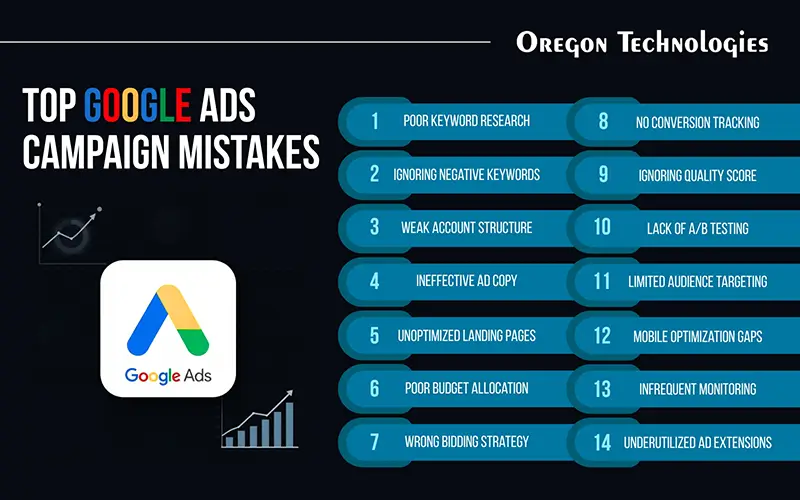
Below are the most frequent Google Ads Management Mistakes businesses make and how they impact company performance:
- Poor Keyword Research and Selection: One of the most frequent mistakes is ineffective keyword research. Many advertisers focus only on high-volume keywords without considering search intent or competition. This often attracts irrelevant traffic that does not convert. Without a balanced mix of long-tail, transactional, and branded keywords, campaigns struggle to generate qualified leads. Strategic keyword planning is essential to ensure ads appear for the right audience at the right stage of the buying journey.
- Ignoring Negative Keywords: Failing to use negative keywords is another costly oversight in Google Ads Management. Without exclusions, ads may appear for irrelevant searches, leading to wasted clicks and budget drain. For example, businesses may unintentionally pay for job seekers, research queries, or unrelated service searches. Regularly reviewing search term reports and adding negative keywords helps refine targeting and improves campaign efficiency.
- Weak Account Structure: A disorganized account structure is one of the most damaging mistakes. When campaigns and ad groups are not segmented properly, ad relevance declines and quality scores suffer. Mixing multiple services or products within the same ad group makes it difficult to create targeted ad copy. A well-structured account improves performance tracking, bidding control, and optimization accuracy.
- Ineffective Ad Copy: Ad copy plays a major role in attracting clicks and driving conversions. Generic messaging, lack of differentiation, and weak calls to action are common pitfalls. If ads fail to address user pain points or highlight unique value propositions, engagement drops. Strong ad creatives should align with search intent, include compelling headlines, and clearly communicate benefits to maximize click-through rates.
- Not Optimizing Landing Pages: Driving traffic without optimizing landing pages is a critical mistake. Users expect a seamless experience after clicking an ad. If landing pages load slowly, lack mobile responsiveness, or present mismatched messaging, visitors are likely to bounce. Conversion-focused design, clear CTAs, and relevant content are essential to turn ad clicks into measurable outcomes.
- Poor Budget Management: Budget misallocation can significantly impact campaign success. Some advertisers spread budgets too thin across campaigns, while others overspend on underperforming keywords. Without performance-based budget adjustments, ROI declines. Effective Google Ads Management requires ongoing spend analysis to ensure funds are invested in high-converting segments.
- Choosing the Wrong Bidding Strategy: Bid strategies directly influence ad visibility and cost efficiency. Selecting automated bidding without sufficient data—or relying solely on manual bidding without optimization—can limit performance. Each campaign requires a bidding model aligned with its objectives, whether conversions, clicks, or impressions.
- Lack of Conversion Tracking: Running ads without conversion tracking is like operating without performance visibility. This mistake prevents advertisers from measuring leads, purchases, or form submissions. Without accurate tracking, optimization decisions lack data support, making it difficult to scale successful campaigns.
- Ignoring Quality Score: Quality Score impacts both ad rank and cost-per-click. Low scores often result from poor keyword alignment, weak ad copy, or irrelevant landing pages. Ignoring this metric leads to higher advertising costs and lower ad placements. Continuous optimization helps maintain competitive positioning.
- Not Conducting A/B Testing: Testing is fundamental to campaign growth, yet many advertisers rely on static ads. Without A/B testing headlines, descriptions, or CTAs, performance improvements remain limited. Regular experimentation identifies high-performing variations and drives incremental gains.
- Overlooking Audience Targeting: Keyword targeting alone is no longer sufficient. Advanced Google Ads Management includes audience layering such as remarketing, in-market segments, and demographic targeting. Ignoring these signals reduces targeting precision and conversion potential.
- Neglecting Mobile Optimization: With mobile devices driving a majority of paid traffic, failing to optimize for mobile is a major mistake. Poor mobile UX, slow load speeds, and unresponsive design negatively impact conversions. Mobile-first optimization is essential for modern campaign performance.
- Infrequent Performance Monitoring: Launching campaigns without consistent monitoring leads to prolonged inefficiencies. Metrics such as CTR, CPC, and conversion rates require regular review. Ongoing analysis ensures quick adjustments and prevents unnecessary budget waste.
- Underutilizing Ad Extensions: Ad extensions enhance ad visibility and engagement but are often underused. Features like sitelinks, callouts, and call extensions provide additional information and improve click-through rates. Leveraging extensions strengthens ad competitiveness.
Struggling with underperforming ads?
Let our Google Ads specialists optimize your campaigns and turn wasted ad spend into measurable results.
Mastering Google Ads campaign management requires more than technical setup—it demands strategic oversight, data analysis, and continuous optimization. By recognizing the common mistakes and avoiding them, businesses can eliminate budget waste, improve targeting accuracy, and enhance conversion performance. From keyword research and ad copy to bidding strategies and landing page alignment, every element plays a role in campaign success. Businesses that prioritize ongoing optimization and avoid these common pitfalls can unlock the full revenue potential of paid search advertising.